Client:Under NDA — A global hospitality technology provider specializing in integrated management solutions and digital payment systems for the international hotel industry.
Impact
Faster decision-making during peak hours.
Reduced guest waiting time in the lobby.
Improved shift handover clarity.
Better coordination between reception and housekeeping
Operational Context
Framing The Problem
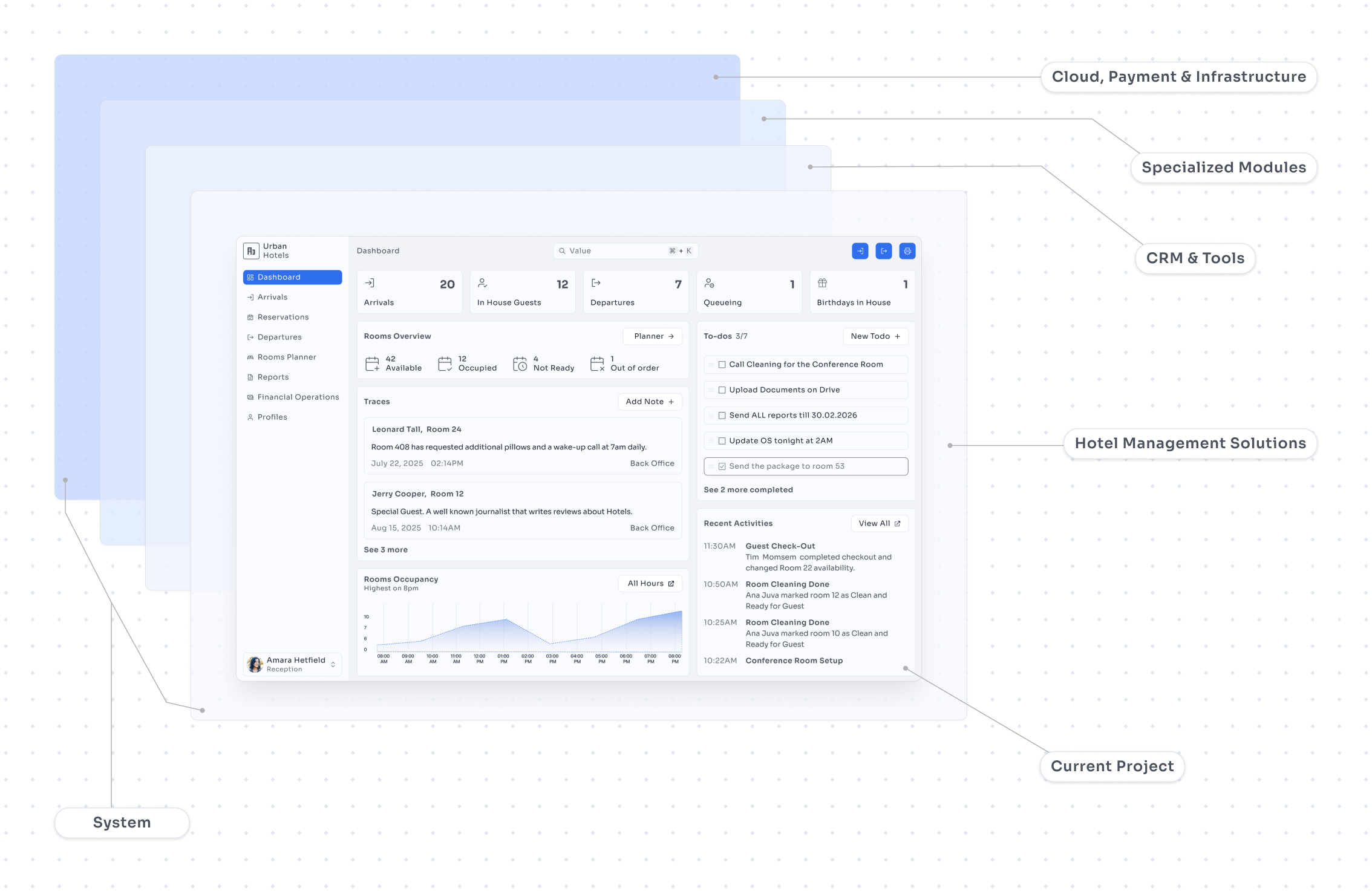
This product is part of a global property management system used by hotels to manage everything from reservations and room assignments to guest handling and check-ins.
Reception teams work in a high-friction
Pain Points
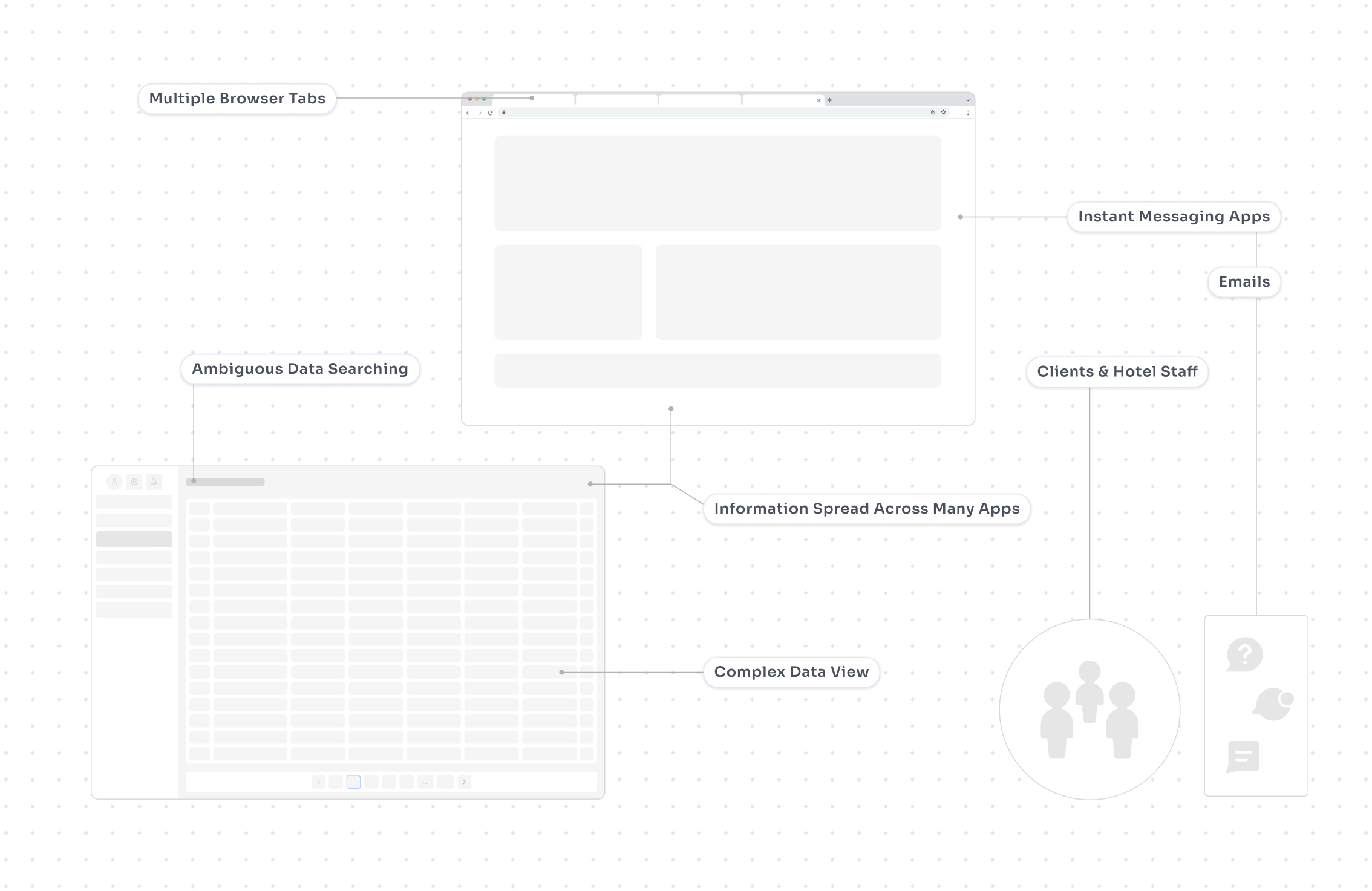
Peak times, constant context switching, and a large number of people wanting that grab their attention.
What is the staff interested in?
What's going on now?What is going to happen?What should be paid attention to now?
The staff are constantly searching for the answers to these three questions.
What should be taken into consideration?
Constraints
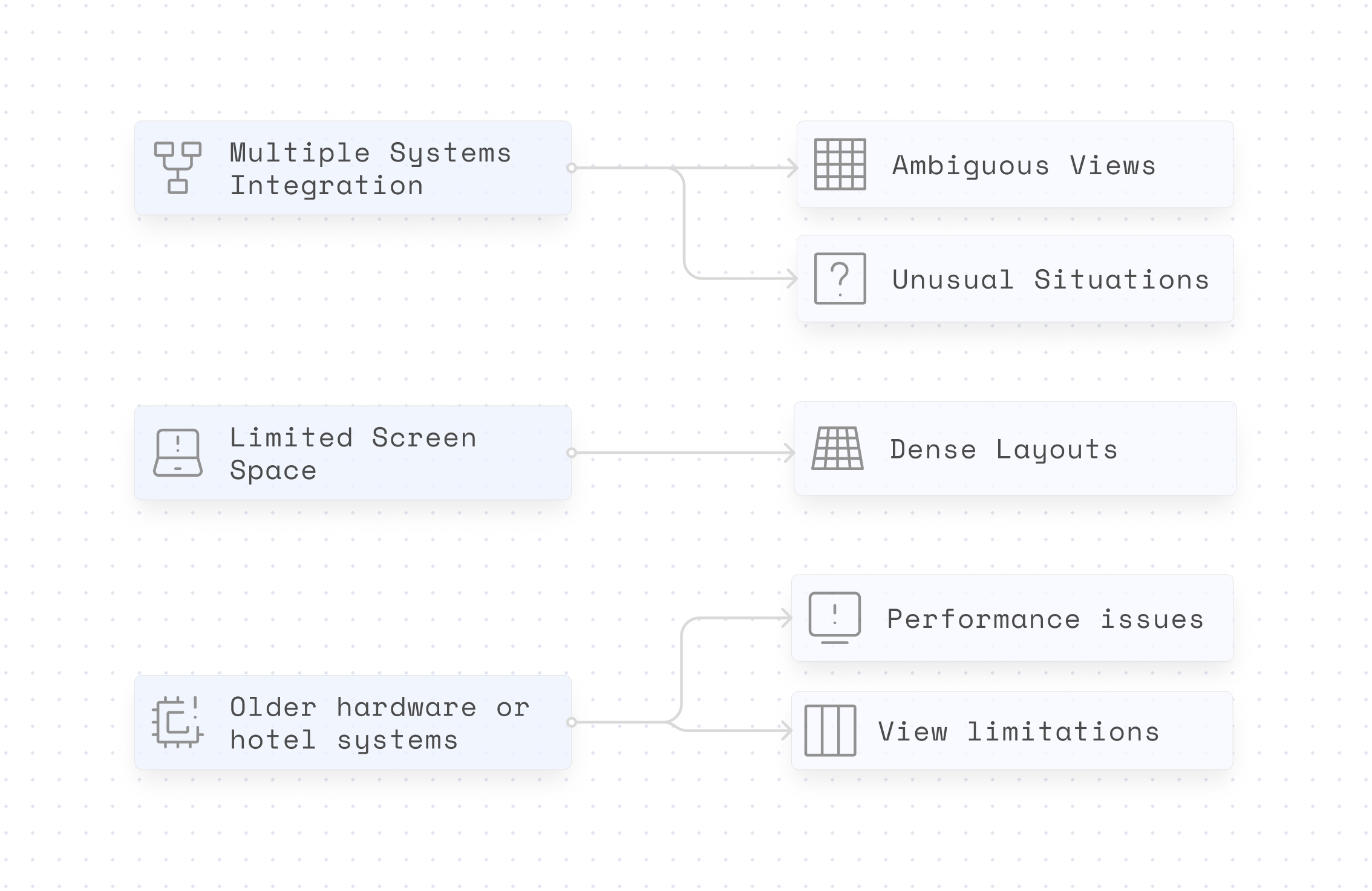
These factors were discovered while working on solutions by combining interface ideas with technical constraints.
Technical requirements that were listed as business priorities.
What must be included?
Use Legacy system UI patterns
Avoid radical interaction models
Include persistent context
Supports localization
Date/Time Formats
Keep existing naming conventions
Tasks, Notes, and Activity
Reusible Components
What will not be done?
Nice to have Animations
A lot of graphs and charts
Images, videos, and audio
Multiple Typefaces
Moving or resizing elements
Setting user preferences
Picking colors
Switching modules
The problem statement
Reception staff are overloaded
Arrivals, departures, room updates, and guest requests compete for attention in a fast-paced environment.
Operations become less efficient
Critical information is spread across multiple screens, slowing decisions and increasing the risk of missed details.
The platform delivers less value
When staff can't quickly understand what's happening, the system becomes harder to rely on as the operational hub of the hotel.
Solution
A single operational dashboard that consolidates real-time activity into a structured, scannable interface.
Decision Ⅰ
One surface for operational clarity
The dashboard unifies all high-frequency workflows into a single view, reducing context switching during operations.
Core actions like check-in, check-out, search, and reporting remain persistent and accessible at all times.
The dashboard answers 90% of daily questions without leaving the page.
Decision Ⅱ
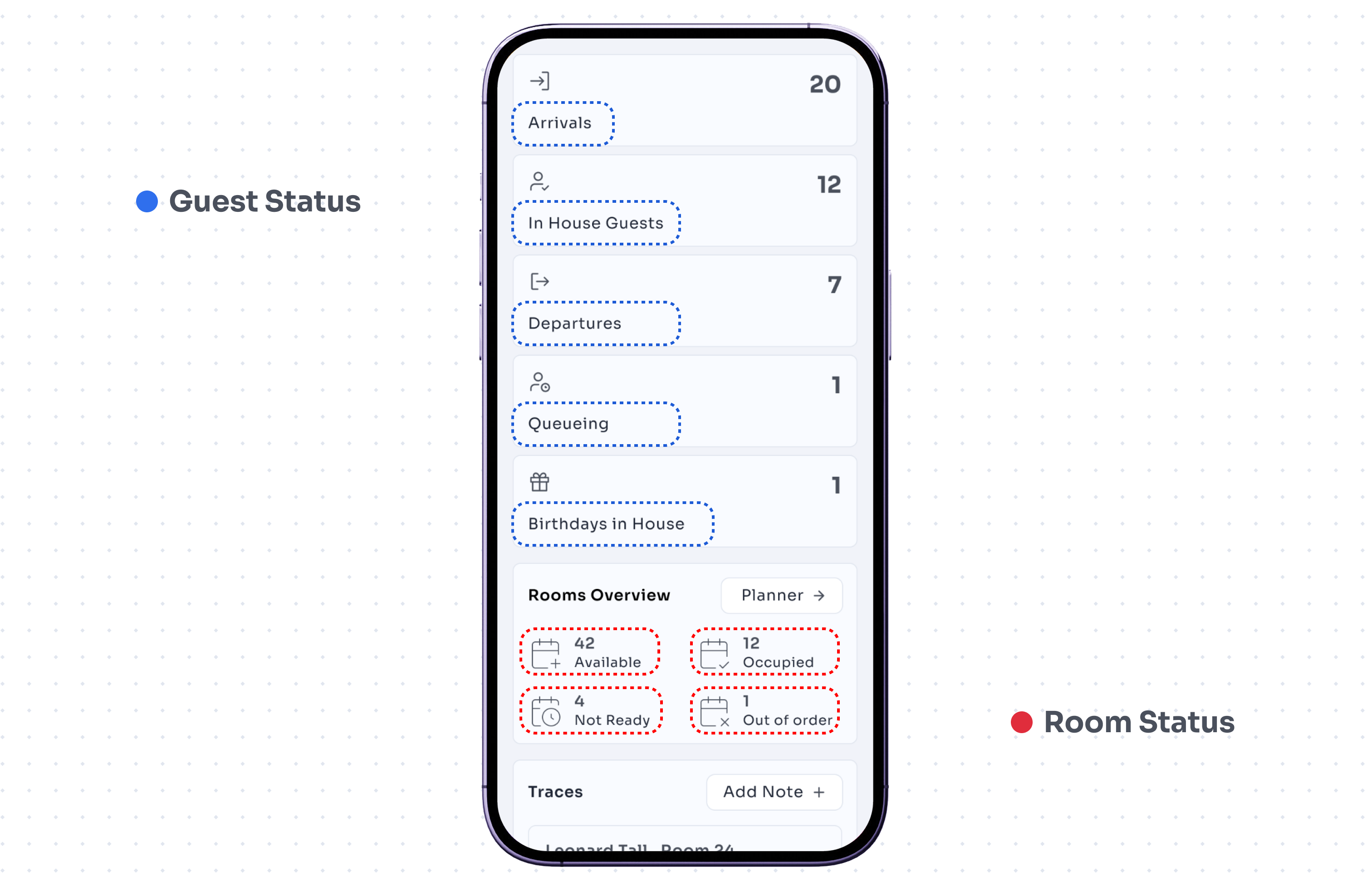
Status-first information hierarchy
Room and guest states are prioritized over raw data to support faster scanning and decision-making.
This improved productivity and cut down on mistakes.
Decision Ⅲ
Designing for shift handover
Hotel operations run across multiple shifts and departments. Pending tasks, guest notes, or recent actions — can easily be lost during shift changes.
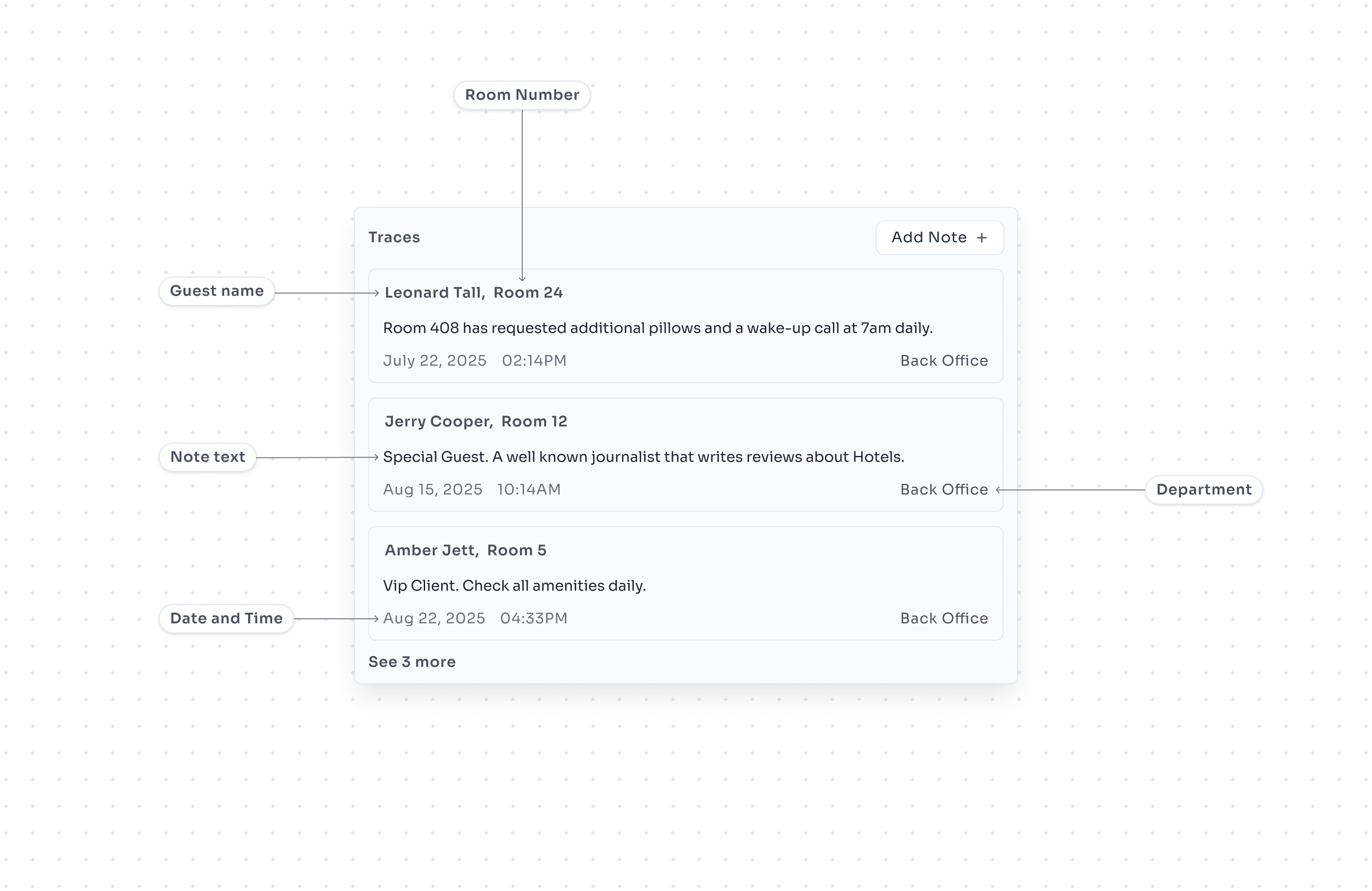
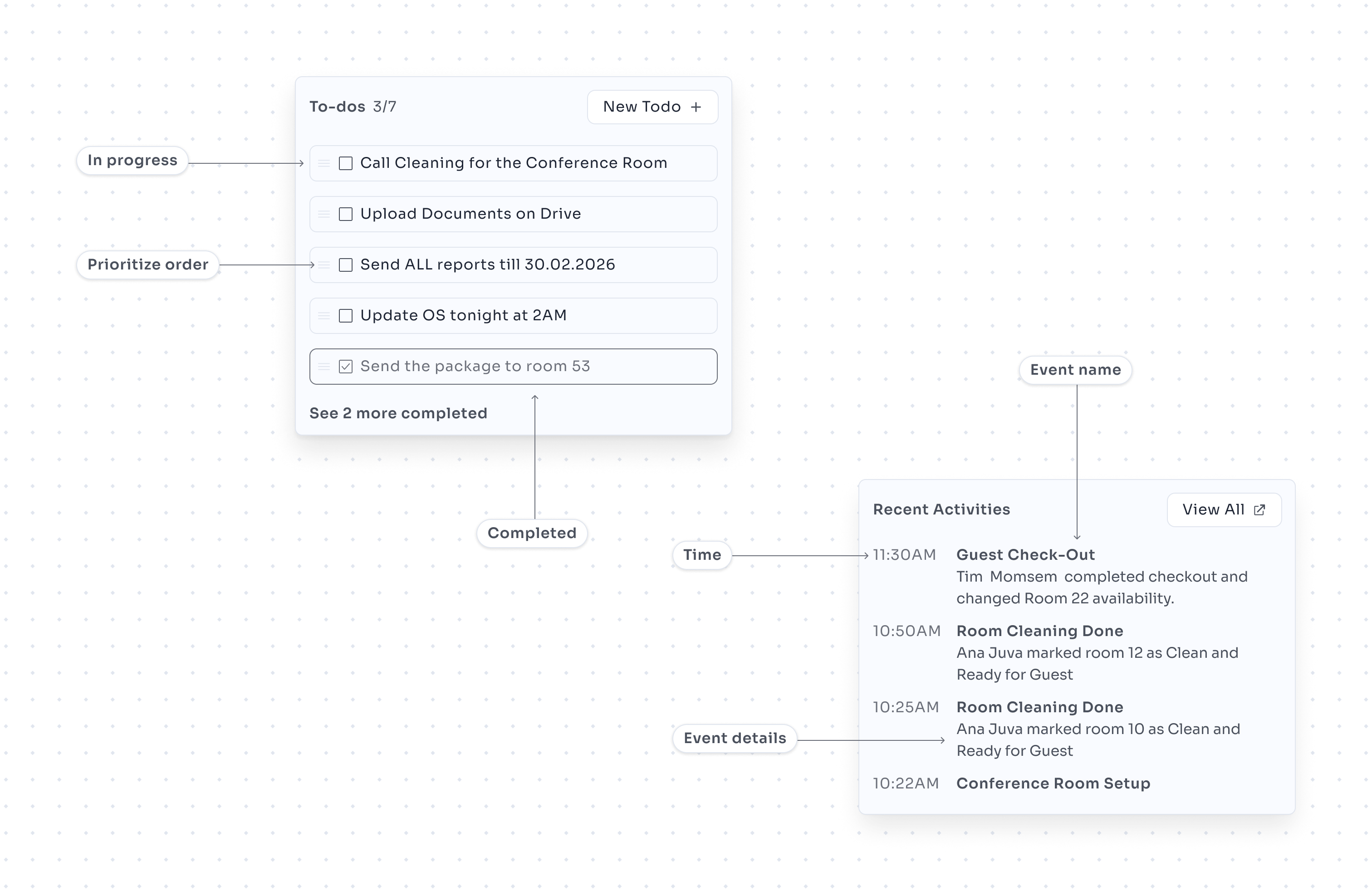
To prevent this, the dashboard includes Todos, Notes, and Recent Activities, creating a shared operational memory for the team.
Traces preserve important guest-related information that may influence service (preferences, allergies, special requests).
To-dos help staff track responsibilities during a shift (e.g., prepare VIP room, follow up on late checkout).
Recent Activities provide visibility into the latest actions in the system (recent check-ins, room status changes, task updates).
By surfacing this information directly on the dashboard, staff can quickly understand what has happened, what needs attention, and what comes next , improving coordination between reception, housekeeping, and guest relations.
As a foundation for consistency
Design system
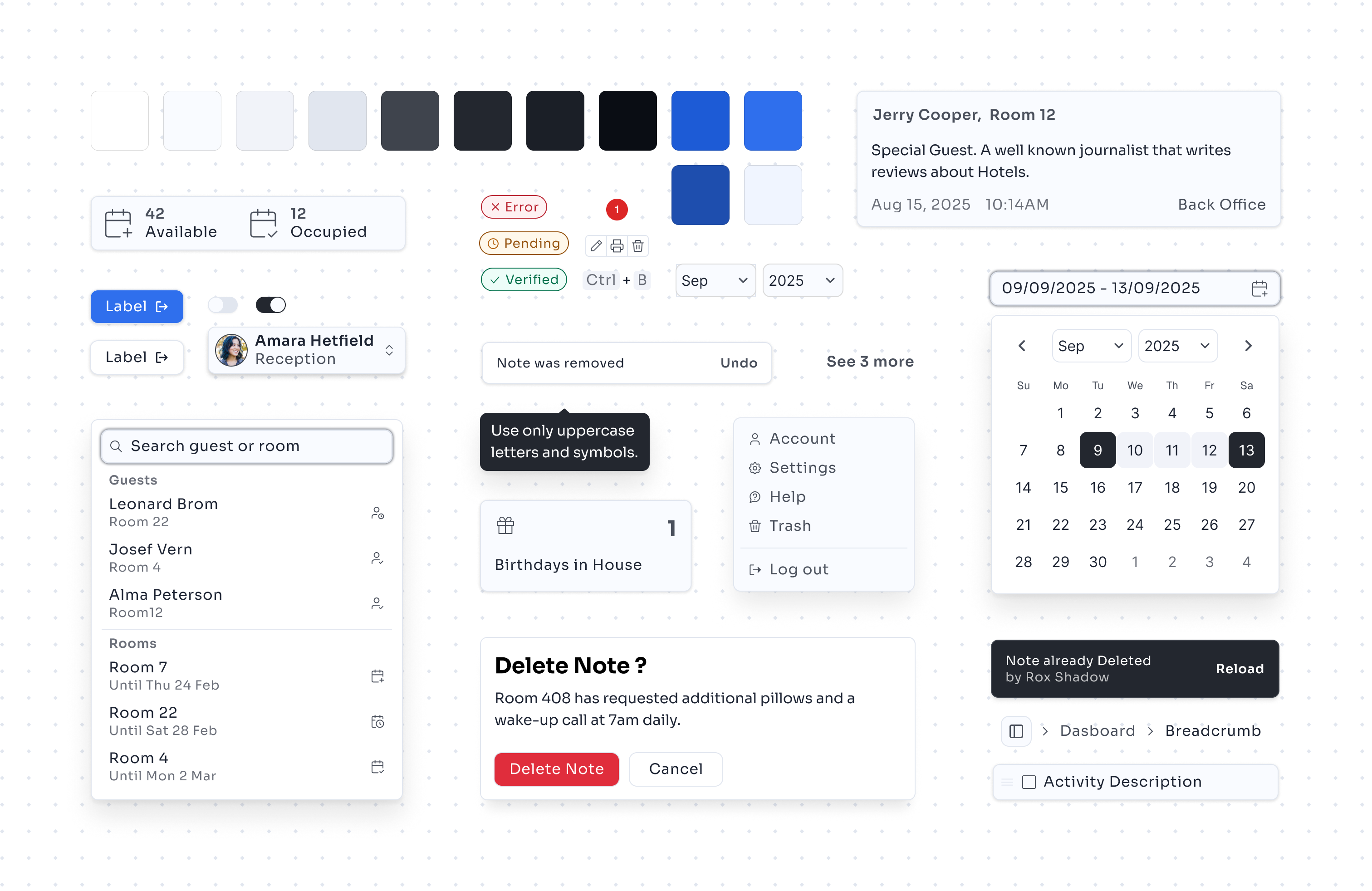
The interface is based on a system of reusable parts that is made to work and grow together with the platform.
semantic color system for operational states (success, warning, error)
spacing and typography tokens for hierarchy
reusable components
light and dark mode support
accessible contrast and interaction states
This approach ensures the dashboard can extend into additional modules (reservations, reports, and financial operations) without breaking consistency.
What went wrong?
Traces and different hotels
In some hotels, traces also relate to things other than guests. They may also relate to events or situations — we failed at this task.
Fortunately, I have discovered this before release and we managed to improve the user flow.
Drag and drops
I reviewed the constraint using drag-and-drop. I included sorting in the to-do list, which allowed users to prioritize the tasks' importance by dragging them.
Learnings
I've learned that operational products don't succeed because they show more information. They succeed because they reduce uncertainty.
When a product involves multiple organizations, I will double-check the companies' internal particularities and processes.
Reception and hotel staff think in statuses and exceptions, not screens. Many operational teams are guided by this principle.
What's next?
Reduce check-in friction during peak hours.
Improve user interactions by incorporating purposeful, subtle animations and test with users to ensure usability.